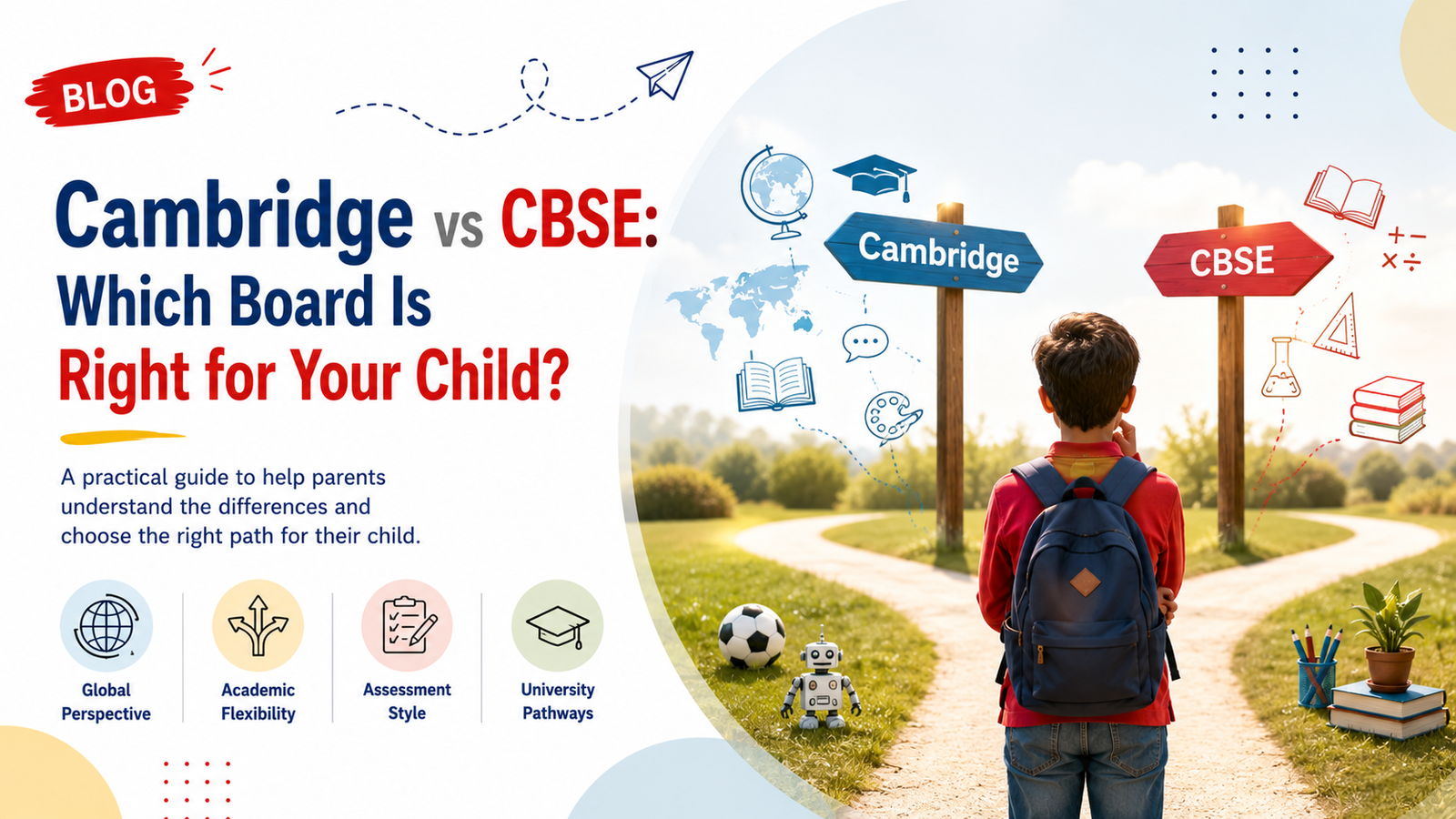
Cambridge and CBSE are both strong systems, and neither is universally better. They suit different children and different goals. Cambridge (IGCSE and A Level) emphasises depth, application, and independent thinking, and travels well internationally. CBSE offers a structured, content-rich curriculum closely aligned with Indian competitive examinations. The right choice depends on how your child learns and where you see them heading.
Curriculum and teaching style
CBSE follows a defined national syllabus with an emphasis on thorough content coverage, which aligns closely with entrance tests like JEE and NEET. Cambridge places more weight on understanding and applying concepts than on memorising them, with coursework and enquiry built into many subjects. A child who enjoys reasoning things out often thrives under Cambridge, while a child who values clear structure and defined targets may prefer CBSE.
Assessment
The assessment philosophies differ. CBSE relies on regular examinations and is geared towards preparing students for high-stakes Indian entrance tests. Cambridge uses a mix of examinations, practical work, and coursework, and its questions tend to reward analysis and application over recall. Neither is easier. They test different strengths.
University pathways
Both boards are recognised by Indian universities and abroad. Cambridge qualifications are widely understood by international universities and can smooth applications overseas. CBSE is the natural fit for Indian competitive examinations and the domestic university route. If overseas study is a real possibility, Cambridge has an edge. If the goal is Indian professional entrance examinations, CBSE's alignment is an advantage.
Flexibility and subject choice
Cambridge generally offers broader subject flexibility, particularly at A Level, where students specialise in a small number of subjects in depth. CBSE follows a more fixed structure. Families who want their child to combine unusual subject mixes, or to go deep in a few areas, often find Cambridge more accommodating.
Cost and availability
Cambridge schools typically cost more and are less common, especially in smaller cities, which can mean fewer local options. CBSE schools are far more numerous and generally more affordable. This practical reality matters, and in some regions the choice is shaped as much by what is available nearby as by philosophy.
How to decide
Match the board to the child and the goal, not to reputation. Consider how your child learns, whether overseas study is on the table, and what is realistically available near you. A confident, curious learner aiming at international options leans Cambridge; a structured learner targeting Indian entrance examinations leans CBSE. Many families also value schools that offer international exposure alongside Indian grounding. Dass and Brown Experiential Learning School (Dbels) in Panchkula offers a Cambridge pathway for families in the Tricity seeking that route. The best decision is an informed one, so weigh both honestly against your child's needs.